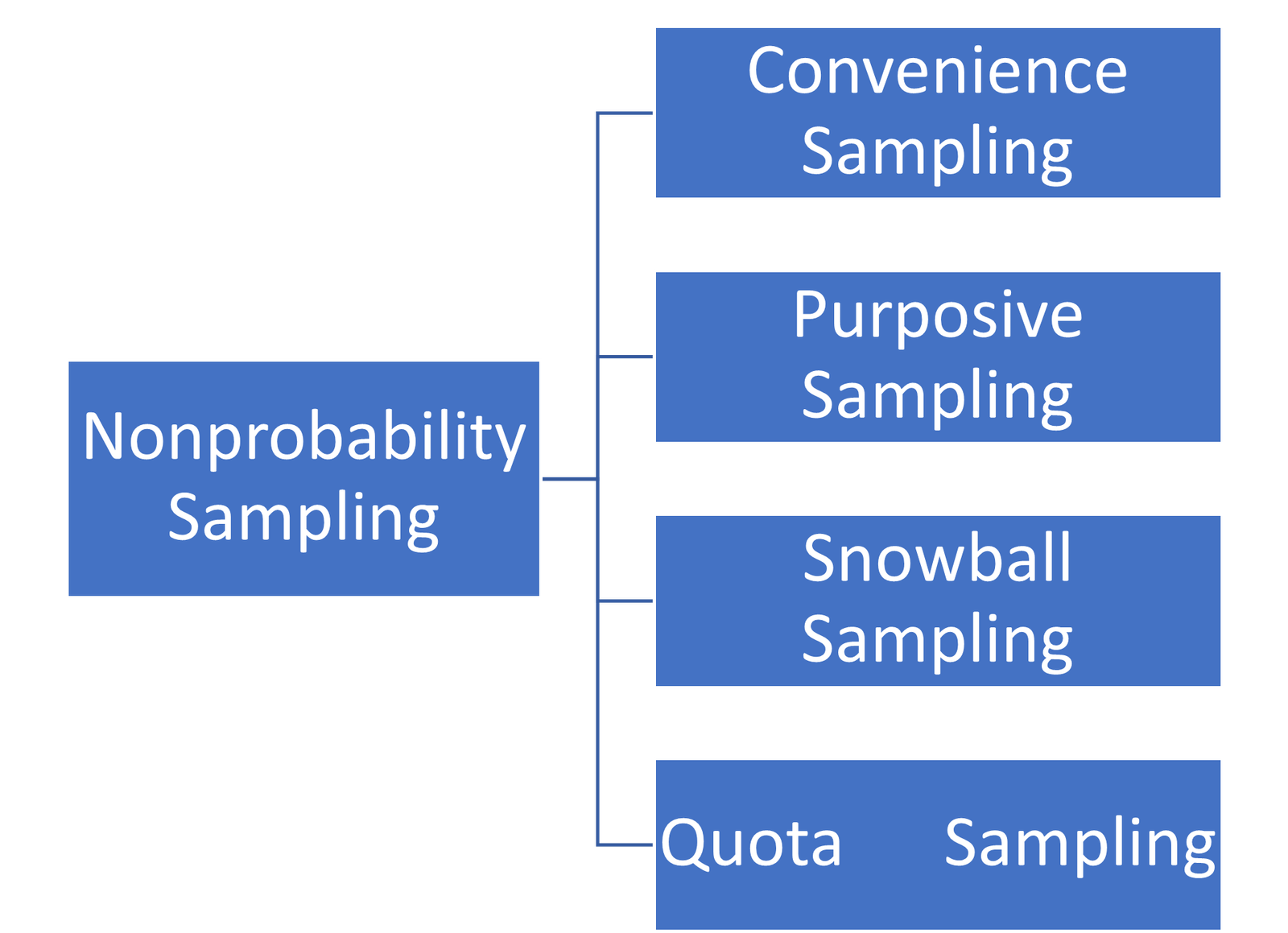


Sampling is a statistical process of selecting a part of population of interest to generalize the result of the sample to all the population. What makes difficult to conduct interview about specific topic to the whole population is cost and feasibility issue. In this article, sampling techniques are presented deeply with two main methods which are probability sampling and non-probability sampling to guide the researchers and master them a technique that help to select an appropriate sample
Sampling Terminologies
Population versus Sample
A population is the entire group that you want to draw conclusions about while sample is the specific group that you will collect data from, the size of the sample is always less than the total size of the population.
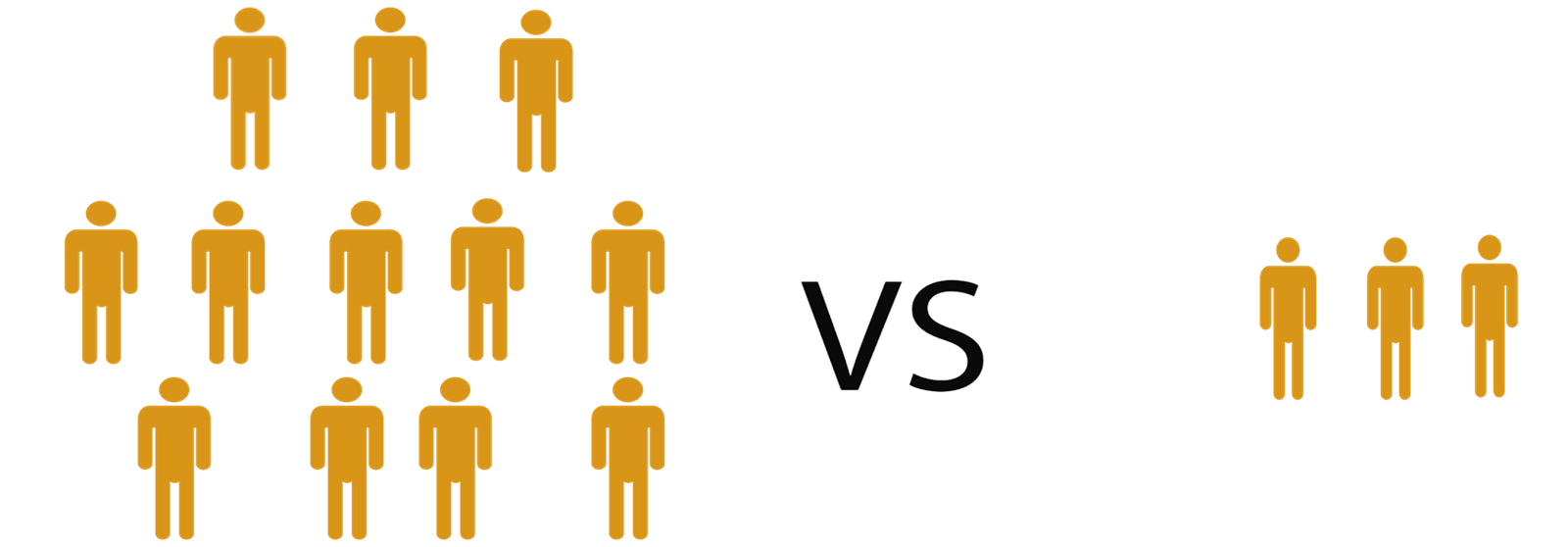
some examples of population & sample
| Population | Sample |
| Undergraduate students in Mogadishu | 250 undergraduate students from two universities in Mogadishu |
| Somali Youth unemployment | Somali youth who are not working and have graduated |
| Advertisements for Data analyst jobs in Somalia | Top 10 search results for advertisements for data analyst jobs in the Somalia at specific period |
| All regions of Somalia | Regions at the northern part of Somalia |
Population Parameter and Sample Statistics
Population Parameters are numbers that describe the characteristics of entire populations while sample Statistics are numbers that describe the characteristics of samples.
population parameter vs sample statistics
| Comparison | Population parameters | Sample statistics |
| Size | N | n |
| Mean | ||
| Variance | ||
| Standard deviation | s |
Sampling and Sampling Unit
Sampling is a technique of selecting a part of the population to make statistical inferences and estimate the characteristics of the whole population. sampling unit is a selection of a population that is used as an extrapolation of the population, such as households, individuals, hospitals or business.

Sampling frame and Sample Size
Sampling frame is the actual list of individuals that the sample will be drawn from. for example, a researcher wants to investigate a working condition of Hayat Mall staff, so the sampling frame would be human resource database that contains the names and contacts information of all of them. Sample size is number of respondents to be included in the study, for example if Hayat Mall has 500 staff and researcher selects 120 of them to participate his study, then the simple size is 120.
Sampling bias and sampling error
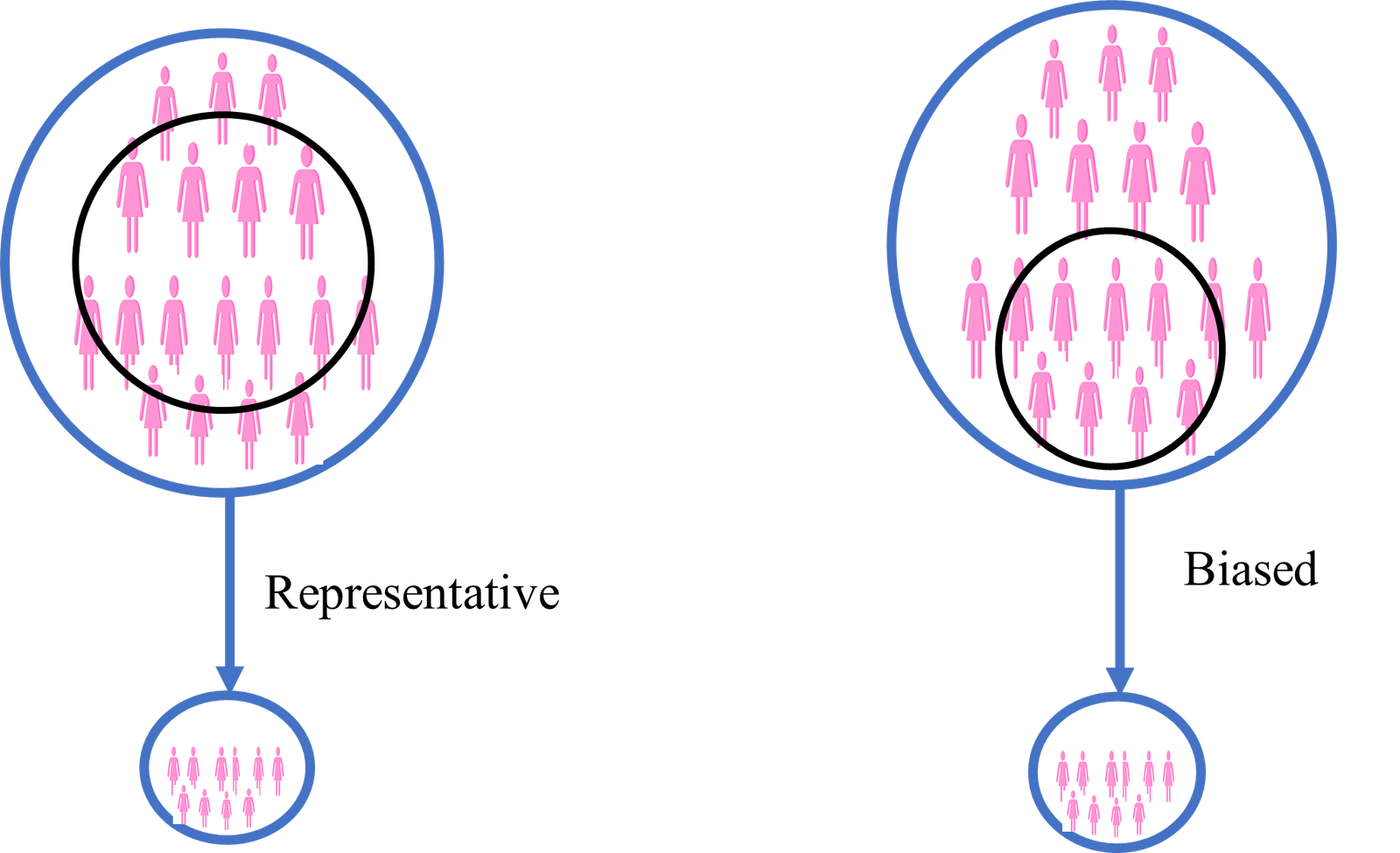
sampling bias occurs when some members of a population are systematically more likely to be selected in a sample than others. It is the difference between a population parameter and a sample statistic and it occurs when the sample is unrepresentative of the population
Why Sampling
Cost, possibility issue and other factors make very necessary to use sample instead of population.
Time issue: sometimes contacting target populations is too time consuming.
Cost issue: studying all the population units is often too expensive.
Necessity issue: The sample results are usually adequate if the sampling procedure is fixed, for instance, the healthcare specialist can test malaria existence in the blood by taking one drop of blood from your finger not all the blood.
Possibility issue: Checking all the items is physically impossible, for instance, the quality control experts want to examine whether light bulb of large shipment function properly and he cannot check all the lights in the shipment.
Sampling in our Daily Life

Sampling Methods
There are two primary types of sampling methods, and they are probability sampling and non-probability sampling.
Probability Sampling
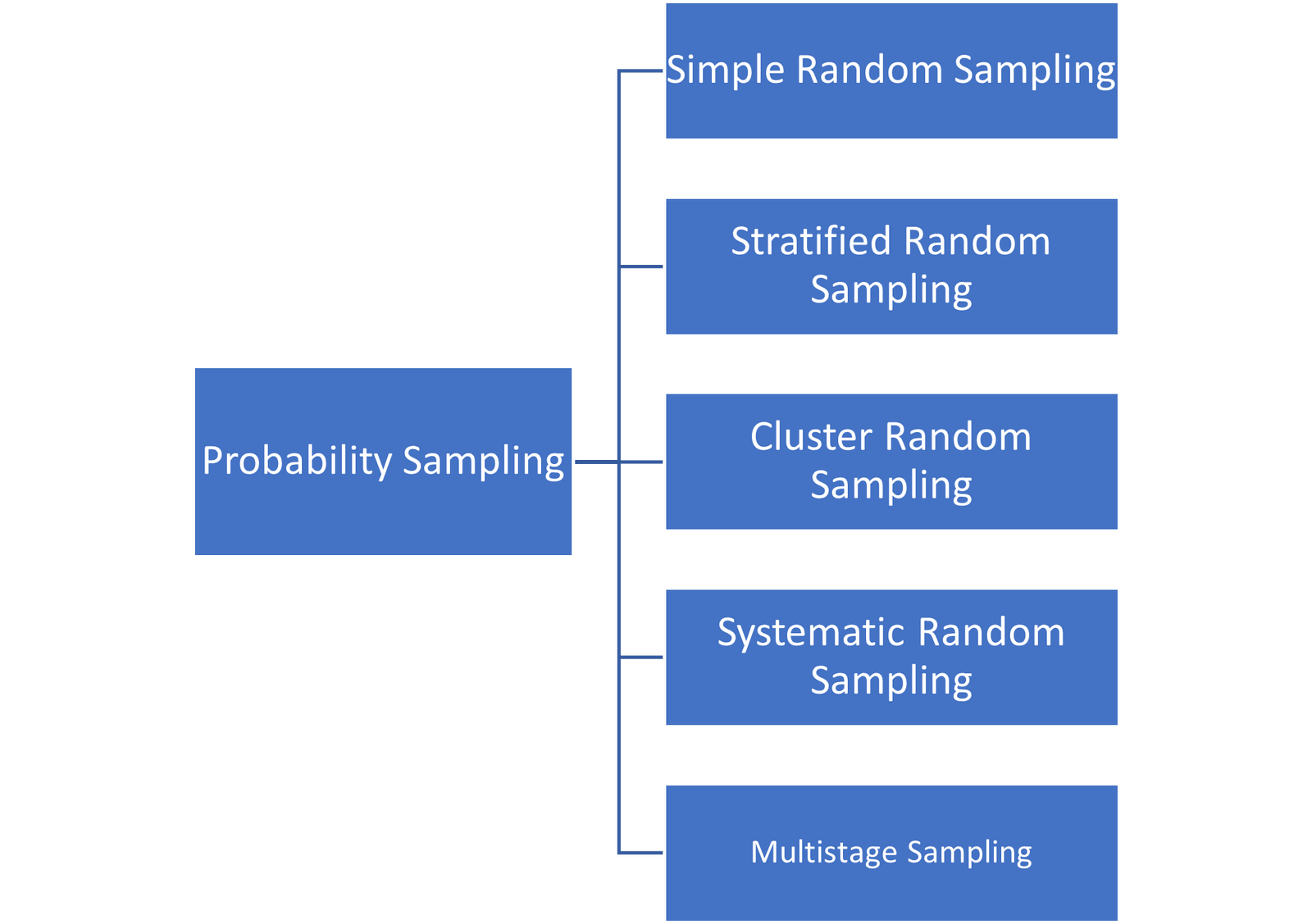
it refers to the selection of a sample from a population, when this selection is based on the principle of randomization, allowing you to make strong statistical inferences about the whole group. There are four main types of probability sampling as shown below figure

Non Probability Sampling
Non-probability sampling is a method of selecting units from a population using non-random method. Since non-probability sampling does not require a complete survey frame, it is a fast, easy and inexpensive way of obtaining data. That means the inferences you can make about the population are weaker than with probability samples. This technique is often used in qualitative research